Cart 0

ChildSafe Australia's Keeping Children and Young people safe - is designed for all people who work with children and young people.

This self-paced online course is designed to provide you with a good understanding of child safety in organisations and your role in creating a safe environment.

Based on the 10 National Principles for child-safe organisation and state child safety standards, ChildSafe's comprehensive training assists everyone to create safer environments for children and young people.

Course overview

After completing this course, you will have an understanding of:

  • Why Child Safety is important.

  • How organisations can create a culture of safety.

    • Who are children and vulnerable people

    • How to build a culture of safety and care

    • What is your duty of care?

  • How organisations and individuals can empower children.

    • `Principles of empowerment and inclusion

    • Importance of sexual abuse prevention programs

    • How you can empower children and vulnerable people

  • How to involve families and communities.

    • Open communications and engagement

    • Your role in open communications and engagement

  • How diversity and equity are promoted and respected.

    • Equitable access and how we can support equity

    • The difference between equality and equity

  • How to ensure staff and volunteers are suitable and supported.

    • What are the steps for appointing and screening suitable Safe People like you

    • What policies relate to working with children in your jurisdiction

    • What is the appropriate behaviour of a Safe Team

  • How your organisation's policies and practices, and effective complaints management should be accessible and responsive to indicators of abuse and disclosure.

    • What is the impact of abuse and how to respond sensitively to a child or vulnerable person who discloses abuse

    • What constitutes reasonable belief

    • What are the barriers to reporting child abuse and how to be prepared to report child abuse to authorities

  • The importance of education and training for staff and volunteers, and how your organisation can ensure that staff and volunteers are able to identify indicators of child harm and respond effectively.

    • What is abuse and the key abuse categories

    • What are the indicators/signs of abuse?

    • Some common myths about abuse

  • The importance of managing physical and online environments.

    • The purpose and importance of safety and risk planning

    • Basic risk factors and a scenario for evaluation of risks

    • High risk activities and critical incidents

    • Some risks in an online environment

  • How conducting reviews ensures that policies and procedures, including record-keeping practices, are being implemented by staff and volunteers.

    • Importance of reviews to improved implementation

    • How you can support the review and improvement process.

  • The need for your organisation to have policies and procedures, documenting how it ensures children’s safety and wellbeing.

    • What is appropriate behaviour and how the Code of Conduct supports and regulates behaviours within the organisation

    • How to build a culture of safety and care

    • How the Code of Conduct can practically address specific situations and disputes

Important: As a result of this training you'll be asked to agree to a code of conduct in dealing with children and vulnerable people.

You will need to go through each of the 10 principles and answer the questions to complete this ChildSafe training.

 
Childsafe test

Principle 1: Culture of Safety is Embedded

In this chapter you will learn

  • Who are Children and Vulnerable people

  • How to build a culture of safety and care

  • What is your duty of care?

 Your organization is responsible for:

  • Including and welcoming children and other vulnerable people

  • Being accountable for safety

  • Risk Management Officers - Creating a culture that values and maintains safety and care


You, as a child facing team member are responsible for;

  • Responsible for the safety and care of children and other vulnerable people in your program

  • Accountable to your Leader

Who are children and other vulnerable people? 

The main principles in this course will apply to people in all of these groups:

1. Children (all people under the age of 18)

2. People with disabilities, mental health issues and other support needs

3. Culturally and Linguistically Diverse (CALD)

4. Aboriginal and Torres Strait Islanders 

5. Lesbian, Gay, Bisexual, Transgender, Intersex, Queer/Questioning (LGBTIQ+)

6. Frail, aged, bereaved

Building a culture of safety and care

Following a robust framework and your organisation’s child Code of Conduct also protects the staff and volunteers in their respective roles.

Yes, including you.

A code of Conduct is a key mechanism to support safety; we will discuss it later in this module.

How could you help to build a culture of safety and care?

Try following these steps.

Keep in mind that working with children is usually within the context of a team. However, this may vary and local description of your operations with children should be applied here to better define activities.

  1. Work with your Leader to build a culture of safety

  2. Be proactive in all areas of safety and care

  3. As much as possible work with another leader (2-person rule)

  4. Treat everyone with respect

  5. Involve participants in decisions that affect them, valuing their insight

  6. Keep appropriate and private records of programs

Duty of care

is a common law concept that refers to the responsibility to: provide those in our care with an adequate level of protection against harm.

1. 'Duty of care' is usually expressed as a duty to take reasonable care to protect children and vulnerable people from all reasonably foreseeable risk of injury and harm

2. Safety management aims to identify and mitigate the ‘reasonably foreseeable risk’.

However, we cannot state categorically what constitutes your duty of care, because the risks are specific to your program context.

3. It really isn't complicated. By following the Code of Conduct of your organisation (we will discuss it later), and evaluating and managing risks, you should be carrying out your duty of care.

Back to select next principle
Back to test to complete answers

Principle 2: Empowering Children & Vulnerable People

In this chapter you will learn

  • Principles of empowerment and inclusion

  • Importance of Sexual Abuse Prevention Programs

  • How you can empower children and vulnerable people

 Your organization is responsible for:

  • Supporting everyone to understand what child safety and wellbeing is

  • Informing children and other vulnerable people about their rights and responsibilities in an age appropriate way

  • Ensuring the organisational culture is safe for them and includes them in building this culture

You, as a child facing team member are responsible for;

  • Respecting the identity and culture of all

  • Developing skills in working with them

  • Building on their strengths and capacities             

Children and vulnerable people are safer when valued and celebrated for who they are and their contributions.

It's important to recognise that because of a person's age, or other vulnerability, they can be disempowered and are at greater risk of experiencing harm.

Let's now talk about what you and your organisation can do to empower children and vulnerable people.

Empowerment

Empowerment recognises the strengths of children and vulnerable people and builds on those strengths. Empowering people allows them to become stronger and more confident.

It gives them a greater say in and control of their lives and helps them understand their rights, so they can act on them if needed.

By empowering children and vulnerable people, we can help them to:

  • become more resilient

  • identify risks and know what to do if they are unsafe

  • develop the confidence to seek support if they need it.

Participation 

Participation gives children and vulnerable people opportunities to have their say and to inform the decision-making in your organisation.

This means we need to listen, hear, and respond by making appropriate changes based on what people share. Participation contributes to empowerment when it builds people’s confidence in themselves and the organisations they are connected with. It strengthens relationships and helps people feel valued.

To empower and include children and vulnerable people, we need to make sure they always participate in the decisions that affect their lives. 

Children and vulnerable people should be:

1. free to choose to participate

2. involved in planning decisions

3. heard and included in conversations and activities

4. informed whether a private conversation is confidential or if someone else will need to be told e.g. in a case of abuse

5. informed about their rights

6. encouraged and supported to build strong peer relationships

Sexual Abuse Prevention Programs

Even with the best training and protocols in place, sexual abuse will continue in our community and our organisations.

Sexual Abuse Prevention programs can help children to recognise when abuse is happening and to gain the confidence to talk to someone who can help.

Your organisation is encouraged to consider such a program, where relevant, to build this capacity. 

85% - About 85 percent of children who are victims of sexual abuse know their abuser.

1 IN. 6 - One in six girls and one in eleven boys are sexually abused before they turn 18 years old.

3 X - Sexual abuse is almost three times more likely in children with disabilities.

HALF - Almost half of offences are perpetrated by other children, mostly boys.

Back to select next principle
Back to test to complete answers

Principle 3: Families and communities are informed and involved

In this chapter you will learn

  • How your organisation involves families and the community in its approach to child safety and wellbeing.

  • Open communications and engagement

  • Your role in open communications and engagement

Your organization is responsible for:

  • Involving families and the community in its approach to child safety and wellbeing

  • Providing relevant policies, practices and information

  • Informing families about safeguarding children

  • Encouraging feedback and input

You, as a child facing team member are responsible for;

·      Champion attitudes and behaviours that respect the human rights of all children and young people, and are inclusive, well informed and responsive to diverse needs.

·      Participate in training to recognise and respond effectively to children and young people with diverse needs.

Open communication and engagement

Communicating with children, families, caregivers and other stakeholders about your organisation and its child safety practices is a valuable way to include them in the organisations’ operations, providing a level of awareness visibility and confidence.

While not every policy and procedure is required to be shared, there will be certain key policies, procedures and general information, that should be made available 

Your role in Communication

While the primary responsibility is for your organisation to facilitate it,

You too, have a role in supporting this communication

·      Listen to feedback from all stakeholder groups. 

·      Note key messages for the organisation.

·      Collate personal information as required. 

·      Keep this information secure.

Four simple steps to working with caregivers and stakeholders

1. Ensure that you have written permission from caregivers.

2. Ensure registration and medical forms are completed, as required.

3. Listen to feedback from children and their caregivers and pass the information on to your Team Leader(s).

4. Keep private information secure.

Back to select next principle
Back to test to complete answers

Principle 4: Equity is Promoted and Diversity Respected

In this chapter you will learn

·      Equitable access and how we can support equity

·      The difference between equality and equity

What are your personal and your organisation's esponsibilities in promoting equity and diversity?

Your organization is responsible for:

·       Acknowledging the strengths and individual characteristics of all people

·      Accepting all regardless of abilities, gender or background     

You, as a child facing team member are responsible for;

  • Working in a child-centred way to empower children to participate more effectively

  • Providing a culturally safe and inclusive environment to minimise the risk of discrimination, exclusion, bullying and abuse

Inclusive Behaviour

As we’ve already discussed in Principle 1, vulnerable people include all children and some adults:

1. Children (all people under the age of 18)

2. People with disabilities, mental health issues and other support needs

3. Culturally and Linguistically Diverse (CALD)

4. Aboriginal and Torres Strait Islanders 

5. Lesbian, Gay, Bisexual, Transgender, Intersex, Queer/Questioning (LGBTIQ+)

6. Frail, aged, bereaved

Aboriginal and Torres Strait Islander children 

This standard also focuses on how you and your organisation can establish a culturally safe environment in which the diverse and unique identities and experiences of Aboriginal and Torres Strait Islander children and young people are respected and valued.

How can you support Cultural Safety?

1. Learn about Cultural Safety

2. To encourage children to express their culture and enjoy their cultural rights.

3. Understand the importance of Aboriginal culture to the safety and wellbeing of Aboriginal children.

What is Cultural Safety?

Cultural safety for Aboriginal children has been defined as:

"the child being provided with a safe, nurturing and positive environment where they are comfortable with being themselves, expressing their culture… their spiritual and belief systems, and they are supported by the carer… (who) respects their Aboriginality and therefore encourages their sense of self and identity".

SNAICC(opens in a new tab), Cultural Safety, 2021

All children should feel safe and be safe when participating in your organisation. This includes Aboriginal and Torres Strait Islander children.

Being able to express their cultural identity makes Aboriginal and Torres Strait Islander children stronger and safer. 

This is important for many reasons. In the context of preventing child abuse, it is important because when Aboriginal and Torres Strait Islander children do not feel safe to be themselves and express their culture, the risk they will be abused by others increases and they may be less willing to report abuse.

How can you foster a culturally safe environment for Aboriginal and Torres Strait Islander children and their families?

 1. Learn about Aboriginal cultures

2. Make sure children and their family feel welcome and included

3. Recognise and celebrate Aboriginal peoples, their achievements, communities and cultures

4. Take complaints about racism seriously and respond to them.

5. Provide a supportive environment for Aboriginal children that recognises each person is unique, with their own characteristics, strengths and challenges.

6. Support children to express their culture and enjoy their cultural rights.

A culture of safety and care enables all people to participate with equal access to programs and facilities.

Adjustments may need to be made to enable equitable access.

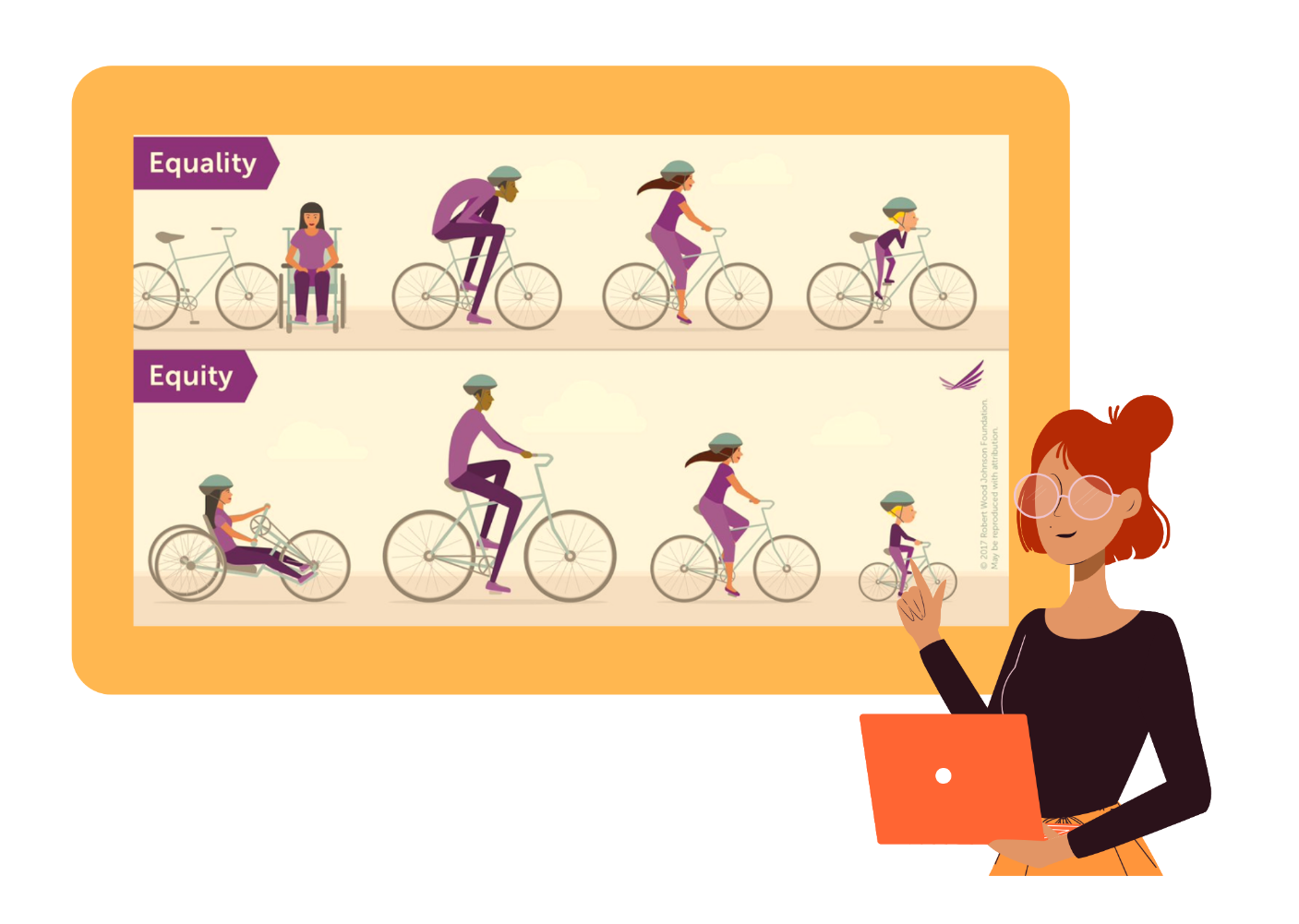
Equity is not the same as Equality

How are they different?

Equality means each individual or group of people is given the same resources or opportunities. 

Equity recognises that each person has different circumstances and allocates the resources and opportunities needed to reach an equal outcome. 


Supporting equity is about following steps like:

1.      Be flexible and creative in your programs 

2.    Provide extra resources where necessary 

3.    Keep instructions clear of jargon 

4.    Find out about cultural differences and expectations

Back to select next principle
Back to test to complete answers

Principle 5: Staff and Volunteers are suitable and supported

In this chapter you will learn

  • The need for your organisation to recruit suitable people and support them to value child safety and wellbeing.

  • What are the steps for appointing and screening suitable Safe People like you

  • What policies relate to working with children in your jurisdiction

  • What is the appropriate behaviour of a Safe Team

Your organization is responsible for:

  • Recruitment

  • Staff development

  • Screening

  • Training and supervision of staff and volunteers  

 You, as a child facing team member are responsible for;

  • Understanding the child safety policies and procedures of your organisation, which include screening

  • Submitting to screening and induction to your role

  • Responsibilities to children including appropriate information sharing and secure record keeping

Safe People

Great care must be taken in the appointment of Team Members by following child-safe procedures.

Recruiting suitable leaders is a major responsibility as some people are unsuitable for work with children or other vulnerable people. 

A robust appointment process

A robust appointment process should be implemented to navigate people through appropriate checks. All leaders should be subject to it.

And it should include these five elements within it:

Application

An organisation's application provides personal details, and can consolidate all the 5 screening elements.

Working With Children Check

A check conducted by a statutory body and required by legislation in your jurisdiction. These vary by state and territory and by country. They generally involve criminal history checking conducted by a government body or police.

References

Referees should know the applicant well and be able to vouch for their suitability to work with vulnerable people, and as part of a team. They should generally not be family.

Sign Policy

Part of the application should include an applicant reading, understanding, and signing off on the child safety policy and code of conduct, affirming their commitment to these key safety drivers.

Interview

An interview with the organisation is appropriate to discover an applicants suitability, skills and motivations.

Working with Children checks around Australia

A review of someone’s prosecution history is vital.

Working With Children Check card or a police check, according to jurisdiction requirements, is required.

However, the WWCC card or police check does not in itself qualify someone’s suitability for working with children.

Each state has its own WWCC system.

Note: State Screening systems are NOT interconnected. It should not be relied on as a sole screening tool. 

How does a Safe Team behave?

  • Are accountable to the leader and to each other, but is prepared to speak up if necessary.

  • Has clearly defined and manageable roles.

  • Commits to regular training

  • Puts the needs of the children and vulnerable people first.

  • Holds each other accountable consistent with the Code of Practice.

  • Is accountable to the organisation, caregivers and the community.

  • And would ideally have at least two responsible appointed leaders.

Back to select next principle
Back to test to complete answers